Certified end markets

Wieland Copper Alloys for Industrial Applications

Each industry uses copper differently. Aerospace teams may ask for traceability and heat-stable performance; electrical programs often prioritize conductivity, bend response and surface consistency; medical and instrumentation buyers focus on precision, cleanliness and repeatable documentation. Wieland organizes application support around those differences rather than treating copper alloy supply as one general catalog category.

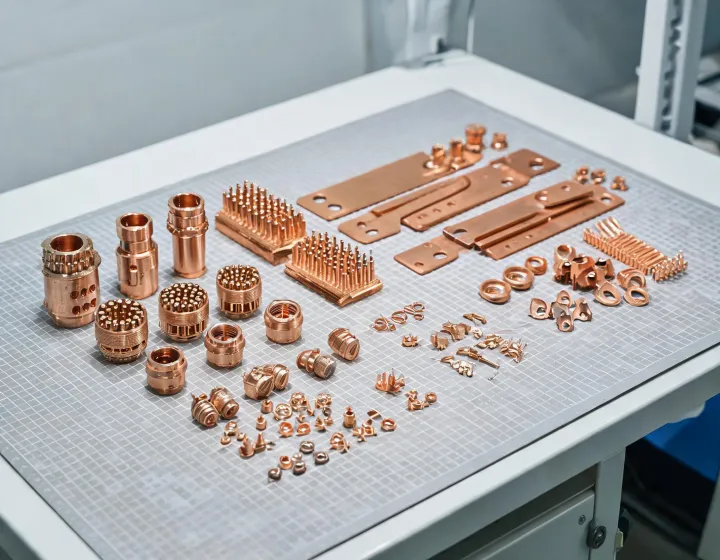
Copper alloy components across aerospace and electrification markets

Aerospace, medical, energy, defense

Copper alloy selection by application environment

Aerospace connectors

High-reliability connector and relay programs require consistent conductivity, spring response and lot documentation. Copper strip selection must account for forming strain, plating compatibility and certificate packages that support regulated supply chains.

Medical devices

Device manufacturers need stable dimensional control, clean surface handling and materials that can move through secondary operations without introducing contamination or unpredictable forming behavior.

Energy systems

Power distribution, renewable infrastructure and industrial equipment use copper bus bar, strip and tube where heat, current density and joining method shape the material decision.

Defense electronics

Rugged electronics need consistent copper alloy response under vibration, thermal cycling and complex assembly requirements. Traceability and qualification planning carry as much weight as basic availability.
Grade requirements

Property matrix for application review

MarketCommon copper alloy priorityReview question
AerospaceTraceability, fatigue response, plating compatibilityWhich lot records and approved process windows are required?
ElectrificationConductivity, thermal path, bend behaviorDoes the design need bus bar, strip, tube or machined stock?
MedicalDimensional stability, cleanliness, repeatable surface conditionHow will material move through cleaning, forming and assembly?
Industrial machineryWear, machinability, lubrication compatibilityShould bronze or brass be evaluated against strength and friction needs?

The table is a starting point, not a replacement for application review. A purchasing team may describe an item as a simple copper part, but the correct route depends on whether conductivity, load, forming strain, corrosion exposure or regulatory documentation is controlling the decision. Wieland-style support turns these variables into a structured discussion so engineering, quality and procurement teams can compare options without losing the constraints that matter in production.

Qualification FAQ

Questions that shape copper alloy approval

Review substitutions when conductivity, temper, strength, corrosion exposure, plating, agency approval or certificate language affects the finished component.

Shape is only one constraint. Electrical load, bending sequence, wear, thermal exposure and required inspection data can point to different copper families.

Define certificate, lot, inspection and labeling needs before the quote is finalized so cost, lead time and release workflow reflect the real requirement.

Application review

Map your copper alloy choice to the industry requirement, not just the product shape.

Send the application, performance target and release schedule. Wieland can help organize the property questions before supplier approval starts.